
An Unplanned Pilgrimage
Reflections on being summoned to a pilgrimage you didn’t plan to take

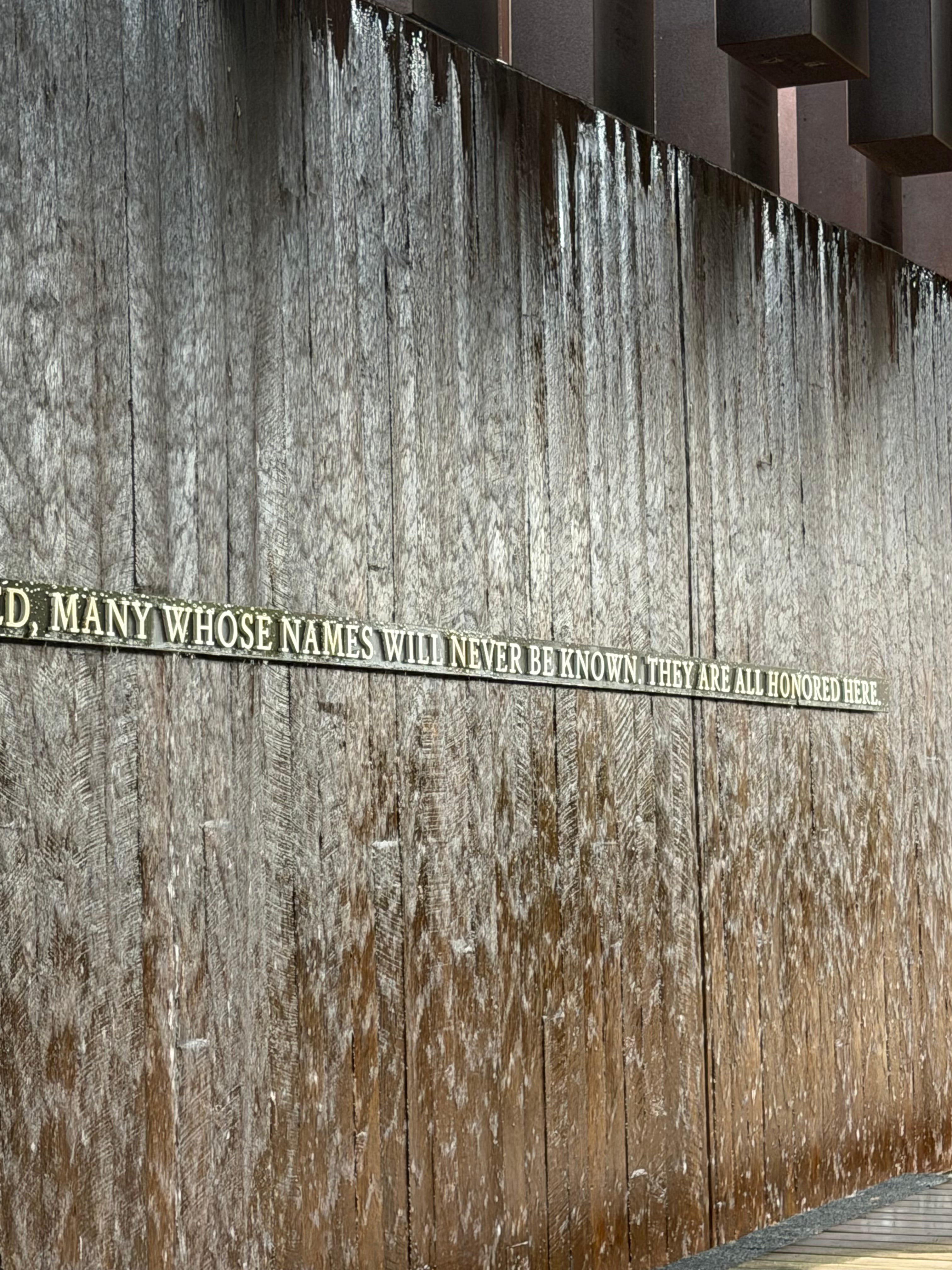
I didn’t plan to take a pilgrimage.
But about a week ago, I shared an impromptu dinner with a friend visiting Atlanta, and she mentioned plans to drive to Montgomery and see the Legacy Sites.
“Want to join me tomorrow?” she asked.
“I do,” I said.
Only on the drive home did I realize how irrational this was—I have three kids. I’d need to rearrange who would take who to their weekend activities. My mother recently had surgery. I had papers to grade, and I didn’t even have a hotel reservation….
Yet, the whisper in my mind was this: There’s no rational time to take a pilgrimage.
It’s a call, a summons.
There’s a cost to saying yes.
But it costs more to say no.
Time slowed in the Legacy Museum, just like it slows in the Holocaust Museum and Pearl Harbor. Memorials like these suspend time. They’re the opposite Disney World or Atlantis, escapes that have an addictive ability to remove us from the real and replace it with the pleasurable. Americans spend billions of dollars for those experiences—experiences let us forget.
How much should we pay to remember?
Wandering through the museum, I read advertisements placed by former slaves after the Civil War. They were looking for missing relatives—a child, a parent, a spouse. I wondered if any of them had been reunited. I looked into the eyes of the people photographed—sharecroppers without shoes, young white men holding pro-segregation signs with such confidence—and I pondered what happened to each of them.
Towards the end of the visit, I spoke with a security worker who stood quietly against the wall in one of the exhibition rooms.
“It must be difficult to spend every day here,” I said.
She shifted from one foot to the other. “It gives me hope.”
“How’s that?” I said.
“I watch each person take a moment to remember this history. They can change the future if they’re aware of what happened, every single one of them.”
I thought of my colleague, Stephanie Arel, who spent months visiting memorials around the world and speaking those who work in them. She describes many of these workers as what Henri Nouwen calls“wounded healers,” people who transform their own suffering to “become a source of life for others.” It’s counterintuitive work because we often believe proximity to grief deepens it. But really, it does the opposite.
It clarifies.
It connects.
It restores hope and creates the possibility for change.
I looked around me: How many of the people here were wounded healers? Imagine all they could transform.
Ahead of me was a group of high school students. Retirees walked behind. All of them had chosen to witness this history on a sunny spring day when they could have taken a hike, brunched on avocado toast. Instead, they opted remember the past because it’s one way to breathe hope into the future.
This is the heart of a pilgrimage—it’s a journey that changes by challenging. People might sit in silence at a convent or walk miles along the Camino with blistered feet. Sometimes, they undertake these journeys to make penance for wrongdoing, or they’re trying to become closer to God. Other times, they’re experiencing grief and yearn for the weight of their suffering to ease.
Often, people visit religious sites for pilgrimages, but not always. The pilgrimage might be to a childhood home or a historic place—locations that matter for different reasons. Still, there’s usually something spiritual at stake—to atone or to simply give thanks.
For me, the Legacy Museum was a pilgrimage unplanned. I didn’t expect to be there that morning—I intended to take my daughter to ballet. And yet, there I was, learning about how the world I live in now descended from this history—from the choices some people made and the choices others didn’t have the freedom to decide. Seeing the faces of those individuals and reading their stories of trauma was difficult. It also changed me. I hope I’ll live differently because of what I witnessed.
This morning, I’m remembering the high school students, the retirees, and the people in the photographs. I’m thinking of my friend, who extended that last-minute invitation. I’m reflecting on the security worker keeping watch over every visitor who paused, who looked, who remembered. I’m recalling that pilgrims don’t travel alone, that there’s safety in numbers.
How did each of them say yes?
How will you?
This essay gave me chills and goose bumps over and over… so many emotions and so much gratitude that you came into my life decades ago so I could still benefit from your wisdom. I can definitely relate to how you felt in this particular museum—I have been to the Holocaust museum twice. Once with my father (whose father was Jewish) right when it opened, and once again by myself about 8 years ago. Both visits have greatly affected me. Then two summers ago while driving from Winnipeg back to southeast Florida we happened to stay in Tulsa, Oklahoma for a night. Out of all the things we could have done on our one free afternoon, my husband and teenagers chose to go to the Greenwood Rising Black Wall St. History Center. It was tucked away on a side street with not much else around, but inside those walls were stories that every American needs to know about. I will have to make time to go to more places like this on my future travels.
Love you friend.
I’ve found my moving from comfort to discomfort helping my ability to remember. That is pilgrimage…